
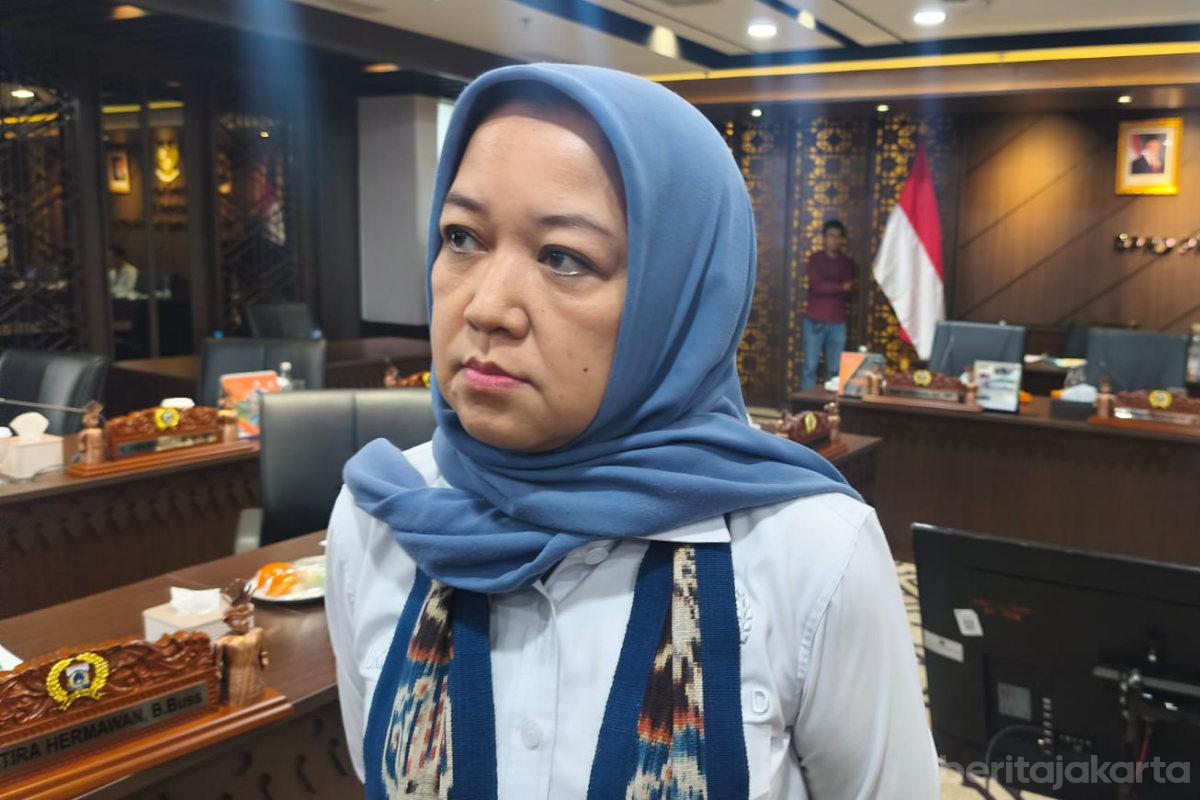
Commission D Calls for More Parks in Residential Areas
Reported by Fakhrizal Fakhri | Translated by Nugroho Adibrata
Jakarta City Council Commission D Chairwoman, Yuke Yurike stated that various programs implemented by the Jakarta Parks and City Forest Agency, Water Resources Agency (SDA), and Environmental Agency have generally been running quite well. Nevertheless, there are still several matters that require attention.
This is something we must consider together
One of these concerns the presence of parks in residential areas. Besides the development of large-scale parks, neighborhood-level parks (taman kampung) are still highly needed.
"Besides the major parks, many parks in local neighborhoods are also needed. This is something we must consider together," she remarked, Friday (4/24).
W. Jakarta City Parks and Forestry Enhances Greening at Marzuki ParkShe also highlighted the management of waste resulting from tree pruning, such as branches and logs. She noted, there are still public complaints regarding the sub-optimal handling of such waste.
"So far, many people have been asking, where does the waste from tree felling or 'topping' go? Is there already a dedicated facility for its processing?" she explained.
She explained that some areas are currently collaborating with the Environmental Agency, which utilizes wood-chipping facilities at the TB Simatupang Trash Screen (SSTBS) in South Jakarta to process large logs into smaller pieces. However, she added, not all tree-pruning waste is currently routed to this facility.
Consequently, temporary collection points remain in several locations. This situation is still tolerable as long as the management is kept under control. However, if the volume continues to rise, a more structured system will be required, potentially involving the addition of facilities through cross-departmental cooperation.
On the other hand, she also pointed out the ongoing shortage of facilities and infrastructure, such as skylifts and dump trucks, which are essential for pruning large trees. These constraints have affected the speed of response to public requests.
“We may have the human resources, but the equipment is limited. As a result, many tasks are left in a backlog,” she concluded.
Further, Commission D has called on the relevant agencies to conduct a more comprehensive mapping of equipment needs. If possible, these requirements should be met through cross-departmental cooperation. However, should resources remain insufficient, an evaluation for future procurement must be conducted.